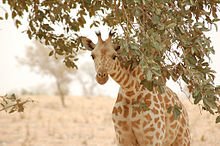

If you''re scratching your head and thinking you''ve never heard of or seen one such beast, you have in fact very likely seen it at a number of South African Game reserves or zoos.
We''re talking about the Giraffa camelopardalis, better known as your common or garden Giraffe.
Named (in Latin) for the way its face looks a bit like a camel and its patterns resemble those of a leopard, the Giraffe is one of my personal favourite African animals. The Giraffe is a wonderful combination of comedy and grace.
Watch a giraffe eating the leaves off the tip of an Acacia tree and you''ll be diverted by the funny facial expressions it makes while chewing thoughtfully. A giraffe bending to drink water will spread its legs wide apart in order to get it''s head down to the watering hole, despite its extra long neck.
But when it walks the giraffe looks amazingly graceful, and it has those extra length ''maybe it''s Maybeline'' eyelashes and pretty pretty eyes.
Here are some giraffe facts for this week''s Wildlife Wednesday post:
Appearance:
-
 Weight: The average mass for an adult male giraffe is 1,200 kg while the average mass for an adult female is 830 kg
 - Height: It is approximately 4.3 metres (17 ft) tall, although the tallest male recorded stood almost 6 metres (20 ft). It is the tallest of all landliving mammals.
- Neck: The giraffe''s extremely elongated neck can be over 2 m (7 ft) in length, which makes up nearly half of the giraffe''s vertical height. This is due to the disproportionate elongation of the cervical vertebrae, not extra vertebrae.
- Coat: The giraffes''s coat is made up of brown blotches or patches separated by lighter hair. Each giraffe has a unique coat pattern. The giraffe''s fur may serve as a chemical defence, and is full of antibiotics and parasite repellents that gives the animal a characteristic scent. Old males are sometimes nicknamed "stink bulls". There are at least eleven main aromatic chemicals in the fur. Because the males have a stronger odour than the females, it is also suspected that it has a sexual function.
- Horns: Both sexes have prominent horns known as ossicones. The females displaying tufts of hair on the top of the horns, whereas males'' horns are larger and tend to be bald on top — the hairs worn away due to necking in combat
Location & Diet:
Habitat: Its range extends from Chad in Central Africa to South Africa. Giraffes usually inhabit savannas, grasslands, or open woodlands. They prefer areas with plenty of acacia growth. They will drink large quantities of water when available, which enables them to live for extended periods in arid areas.
 Social behaviour and reproduction
Giraffes live in groups but they are fairly fluid. Reproduction is broadly polygamous, with a few older males impregnating the fertile females. Male giraffes determine female fertility by tasting the female''s urine in order to detect estrus, in a multi-step process known as the Flehmen response. (Possibly Too Much Information?)
Giraffe gestation lasts between 400 and 460 days, after which a single calf is normally born, although twins occasionally occur.[49] The mother gives birth standing up and the embryonic sack usually bursts when the baby falls to the ground. Newborn giraffes are about 1.8 m (5 ft. 11 in.) tall.
Etymology:
Named Giraffa camelopardalis in Latin for the way its face looks a bit like a camel and its patterns resemble those of a leopard. The word giraffe has its earliest known origins in the Arabic word ziraafa or zurapha, perhaps from an African name. In Afrikaans is known as a kameelperd (camel horse).
(Info and images source: Wikipedia)
So now you know a whole lot more about this archetypal African animal, and next time you see one when on safari confuse and impress the rest of your fellow holiday makers by saying: "Oooh look, there''s an African even-toed ungulate mammal!"
Visit the African even-toed ungulate mammal at one of these Portfolio safari lodges
 |
 |
 |
.Safari Lodge on Amakhala - Eastern Cape
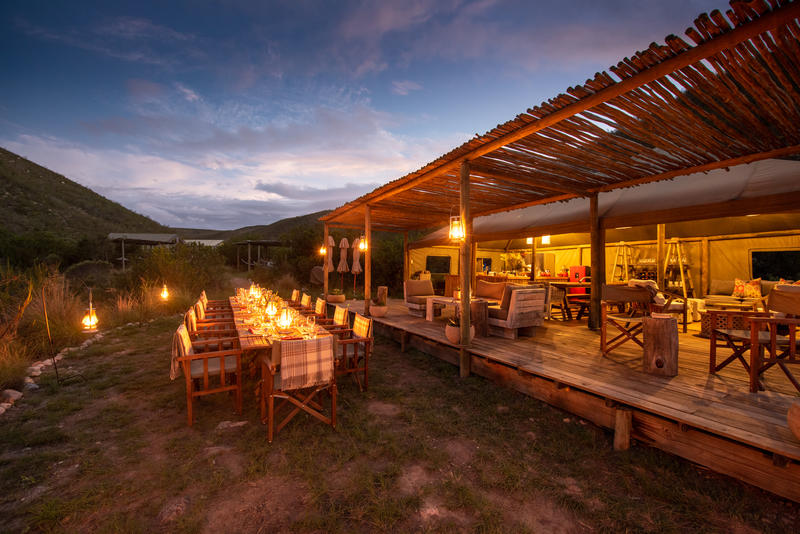
Safari Lodge on Amakhala in the Greater Addo Reserve of the Eastern Cape is an ideal malaria-free, Big Five safari destination after visiting Cape Town and the Garden Route. The romantic Safari Lodge is part of the 7 200 hectare Amakhala Game Reserve, on the N2, 60 km from Port Elizabeth and 60 km from Grahamstown.
Nedile Lodge - Limpopo
Nedile Lodge is situated in the malaria-free, Welgevonden Private Game Reserve in Limpopo, home to one of the the largest collections of privately owned White Rhino, as well as Lion, Elephant, Buffalo and Leopard. Friendly staff welcome you to the charming Lodge, which has been stylishly and creatively designed and decorated to create a warm and most relaxed ambience.
Gondwana Game Lodge - Garden Route
Set amidst rolling hills and indigenous fynbos, Gondwana started six years ago with Mark and Wendy Rutherfoord''s dream of transforming cattle and sheep farms into an 11 000-hectare eco-safari destination. Only 4 hours from Cape Town along the Garden Route, and now restored to its natural beauty of open grasslands, undulating valleys and fynbos.