
Meeting Tristan Waterkeyn
 |
It is early Saturday morning and we are at the Olympia Cafe in Kalk Bay, having coffee and talking. I am strangely enough a little lost for words. Not a good thing when you are interviewing a person. I am also a little mixed up between going for fun or business and I hop back and forth all the time. My mind races a million miles one minute but slows down the next enjoying where it is right now. I don''t think the other person is aware of this but there it is anyway. I think I can, of course, entirely blame the person sitting across from me for this state of mind.
Because the person sitting at the other side of the table does just that, having fun in business, zooming in and out, quickly shifting between ideas, possibilities and the now. The person sitting there is Tristan Waterkeyn.
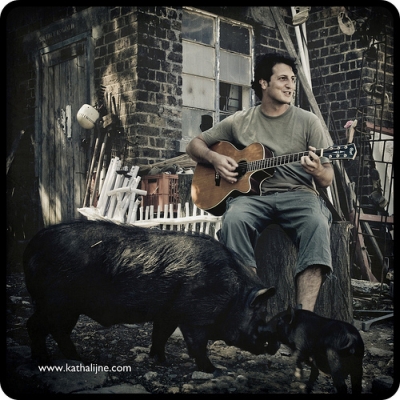
The reason for the interview is a new project on the Cape Town creative scene called "Swimming Upstream". As a young, independent creative Tristan fits the profile perfectly. Born in Tanzania, raised in Kenya and Zimbabwe, he made his way to Cape Town via Europe, China and Australia. Having traveled so much and as a musician himself Tristan brings a different attitude and sense to the music industry.
Tristan started Overtone out of his own need as a musician in 2003. It seemed impossible to find or directly connect with the right people. Overtone is a company that connects people to the entertainment industry and enables them to book bands, musicians and dj’s directly. Overtone has quickly become one of the biggest artist booking and events companies in South Africa and is obviously meeting a need out there.
While running Overtone Tristan released his first album, Hay Day, in 2007. In order to get his music "out there" Tristan came up with a solution he calls Virtual Busking. He uses the web as his virtual street corner where and you never know who''s passing - so why not play? He''s had close on 100,000 downloads and online listens, played on stages around South Africa, the UK, Scotland, Italy and Zimbabwe, as well as live on numerous local and national radio and TV stations - to name just a few things.
 |
Kathalijne Van Zutphen: You studied Philosophy and Comparative Religion. Was having gone to university useful in what you do now?
Tristan Waterkeyn: I''d say no. I didn''t like university very much. I don''t like institutions and I didn''t make any connections with people that I really liked. I met those people outside of varsity, in the music scene but I suppose having studied philosophy may be helpful with songwriting. And it gives you a certain way of looking at things but that''s it.
KVZ: How did you get started?
T.W: I started playing the guitar at 10 and was in a band in Zimbabwe when I was 16 but at that stage I only played guitar. I only started singing once I got to Cape Town. When I started, I felt that the South African music industry was underdeveloped, there was no cohesive way to find people, it was all too fragmented. I wanted to start a music magazine but that was too expensive so I started a website and began sending out (digital) newsletters.
KVZ: What has been the biggest challenge?
T.W: Trying to start a company without capital. Banks don''t give money to things they can''t confiscate. When starting out you need cash and you need a watertight, unmovable business plan. I originally had the Overtone website built in India but that didn''t work out so we had to rebuild it completely. That was a big challenge as well, starting all over.
But I keep going because I don''t know what else to do with myself and I want it to be successful. It''s been over 5 years, a lot of hard work and I believed it would succeed. Africa is getting more and more online and everything is growing. The opportunity and online space we occupy here is amazing. I really want musicians to be able to make a living and the music industry to stop fighting itself. People generally take a lot in the music industry and don''t give a lot back so it''s tough here. At times it seems like they don''t want to make it. I believe that in order to make it you have to work hard, you have to commit and you have to rehearse. I feel that in South Africa there is generally a bad attitude towards business and a lot of people just want to be given stuff. They pretty much just undervalue themselves.
I also want to keep going as a creative person myself. I started Overtone because of the things i needed and was looking for as a musician. At first I was looking for someone else to fix my problems but couldn''t find anyone so I started doing it myself. I wanted to meet other musicians, to play with other musicians so I started open mic evenings. I think people here just need to be more proactive.
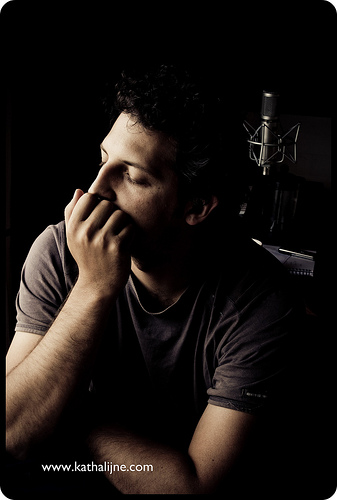
"You can''t just take stuff; you need to give something back; even if it’s only a positive comment or review on a website."
KVZ: Having put your first album online for free yourself what are your thoughts on file sharing and everything being available online for free? How are people still supposed to make a living?
T.W: With the internet you can get lost in a maze of endless stuff. There is so much out there and you can not beat the fact that people download for free, it is simply the way it is. I think if you can’t avoid free downloads you have to use it to your best ability. Put your music out there for free but make a living from a lifestyle that the public can subscribe to, music for movies, in limited print products etc. It really is the only real option we have left, you can use the fact that people download your music to shift other products, through band merchandise, through image and photography, use it as a level of status. Imagine the voice you could have, imagine the ear that’s listening when thousands of people download your music.
KvZ: You seem to have an advantage in that you don''t look at just one product but at the whole spectrum and that *that* will get you what you want and you are smart in the way you go about it. But what if you can''t or just don''t see it? Do you automatically fail?
T.W: If you want to make it you have to learn. Go to shops, look at the marketing and advertising in magazines, look at photography and type fonts, at the lay-out, if you have a question, learn to Google it. There is so much information out there, use it.
You can spend thousands of rand on your demo and hundreds of thousands of rand on recording your album, on hiring equipment and paying musicians but you will still be exactly where you are now unless you start marketing yourself correctly. You need to be smart about things. Home recordings are so good nowadays that you can do a lot yourself as well as learn how to record and produce your music in the process.
When I released my album I printed everybody who pre-bought the album''s name on it. The interaction is great; making music is great, sharing it is a bonus. It is all about having fun. The music industry however is a job and it is about networking, marketing, sales, design, image, branding and competing with a lot of other products on the market.
 |
"I feel that in South Africa there is generally a bad attitude towards business and a lot of people just want to be given stuff. They pretty much just undervalue themselves."
KVZ: How do you stand out, how do you make people notice you?
T.W: Put your stuff out there. My debut album ‘Hay Day’ is available through a viral email. People visit my website, register an email, and they automatically get sent all the download links for the whole album. Once you have the email it is shared with friends and is sent around the world at high speed. It''s shared and downloaded for free. If people like they can make a donation and sometimes they do and that is awesome. It''s thrilling when someone who doesn’t have to pay for something does anyway. It momentarily restores my faith in humans. How do you stand out? Invent something, create attention, get access to promote yourself anyway you can.
KVZ: Do you think that the government should do more to protect artist''s copyright?
T.W: Working up a protection system is a waste of time, I think. No matter what locks or systems they can invent someone will always be smarter and just hack it.
I think we need some sort of ongoing social marketing where the consumer is empowered, and believes in doing the right thing, where there is enough respect for the creative efforts or person that people will want to contribute to their experience and consumption of that. It might work in the same way that friends split a bill after a night out or in hotels that have honesty bars. People should feel good about powering the arts and the creativity they enjoy and should contribute towards making it sustainable. Governments should spend money on more systems where creative people can afford to be creative and where fans feel empowered because they become patrons.
We also need to grow our own celebrity culture. I don''t mean the Hollywood or tabloid style but we need arty indie magazines, more export, more broad spectrum thinking. We can have great new music and sell cool magazines and vice versa.
 |
"People should feel good about powering the arts and the creativity they enjoy and should contribute towards making it sustainable."
KVZ: Are you basically saying play the game or lose?
T.W: Well, you can''t have your cake and eat it. Creatives need to work harder at the business and their fans need to offer real support, or it won''t work. Ultimately, consumers don''t want to pay for something that you (the seller) are willing to do anyway, so you have to offer them something extra. People will pay for the experience, for being part of something, for exclusivity.
KVZ: But isn''t exclusivity out the window these days when everything is already online and free at that?
T.W: No, I don''t think so. Music until it’s been recorded is very abstract, meaning the moment a note is played it''s gone. The old packaging music came in, records, tapes, cd’s made a lot out of the product packaging and that added value. Fundamentally music is still an abstract sort of product and as we move towards more digital and more easily transferable formats it gets harder to justify the added value that the packaging was adding. The recording industry wasn’t making money from music. I think it was making money from packaging and the marketing and distribution of it. What the industry needs to adapt to is the task of actually making money from music without the packaging. Its surprisingly difficult to see how this can be achieved.
These days with digital, sharable formats, more people will be exposed to more music, but people will still pay for the exclusive (packaging) CD, the advance download, to be part of the club, to get some social benefit, but not for the millionth reproduction.
KVZ: Is copyright useless?
T.W: No. People should value what someone creates; there should be a moral, social or cultural obligation to pay for it. You have to give little as a consumer as well. The cliché "sharing is caring" is true, especially in the caring part. You can''t just take stuff; you need to give something back; even if it’s only a positive comment or review on a website.
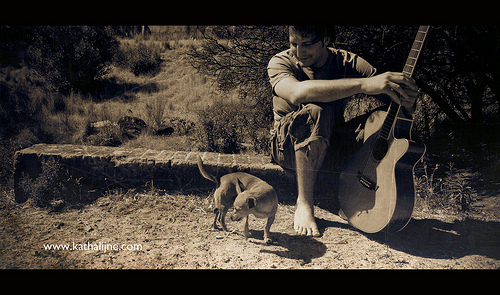
After several lattes and going over the photos from last week’s shoot it is time to leave. Goodbyes on a street corner. A laptop filled with photos and stories. A mind full of options. And that''s the thing about meeting Tristan Waterkeyn.
 |
Swimming Upstream
This is the first interview of the new project Swimming Upstream. The interview and more photos will be published elsewhere in due time. Please keep an eye out online.
- For more information on Tristan Waterkeyn and his music please visit www.tristanwaterkeyn.com or visit www.overtone.co.za or find him on facebook or twitter.

- For more information on Kathalijne Van Zutphen www.kathalijne.com or find her and Swimming Upstream on facebook or twitter.
- Tristan Waterkeyn