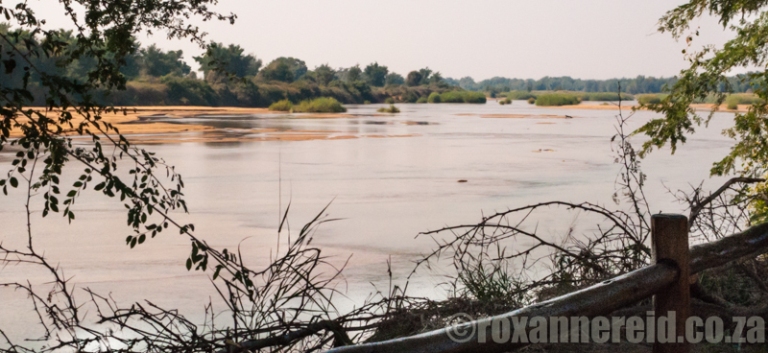
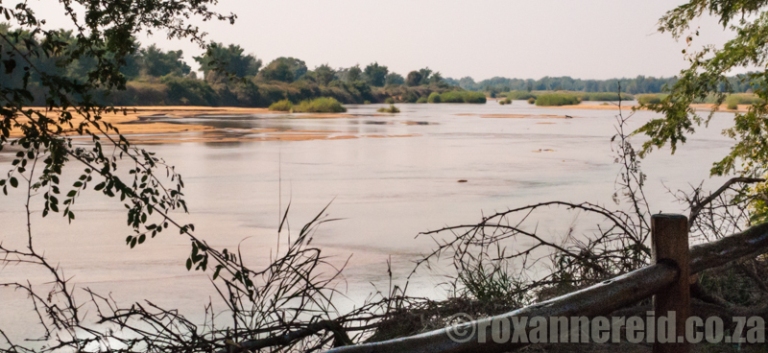
I’m talking about Crooks’ Corner in the far north-eastern corner of the Kruger National Park. Here the Luvhuvhu and Limpopo rivers come together where South Africa, Mozambique and Zimbabwe meet. Today it’s a world of fat baobabs, yellow-barked fever trees and rivers bursting with hippos and crocs as big as dinosaurs. It makes a shady drive along the river from the Pafuri picnic site north of Punda Maria camp.
A hundred years ago it was even more remote, an area reached only by a long and tough wagon trail twisting through thick bush and oppressive heat.
Small wonder, then, that it was a No Man’s Land, a haven for skelms or – as the plaque marking the spot today puts it – ‘people who had no great wish to look into the eyes of the law’ and might at any moment need to escape across an international border. Think ivory poachers, gun runners and other outlaws who chose a free life where they made their own rules and thumbed their noses at the law.
 |
The area’s most useful feature was a beacon marking the corner of the triangle where the three countries met – in those days, the Union of South Africa, Portuguese East Africa and Southern Rhodesia.
If the long arm of the law caught up with you, you could hop over to the other side of the beacon and no one would touch you for fear of breaching an international boundary. Even if lawmen of the three different countries arrived at the same time – unlikely as that would be – you could perch on top of the beacon and snigger at the lawmen as they fought over who should take you into custody.
Today, though, the only skelms we run into are the crocs basking on sand banks in the river, waiting for an unsuspecting antelope to present itself as a prize item on the dinner menu.
About the blogger
Roxanne Reid is an independent book editor and writer with a passion for Africa. She’s happiest in the middle of nowhere, meeting the locals, trying something new, or simply watching the grass grow.
Her travel blog highlights African travel, people, culture & heritage, wildlife & conservation. She has also written for magazines like Wild and Getaway. Her latest book Travels in the Kalahari is available from Amazon.
You can follow her at Africa Addict on Facebook or on Twitter.
Stay in Kruger
 |
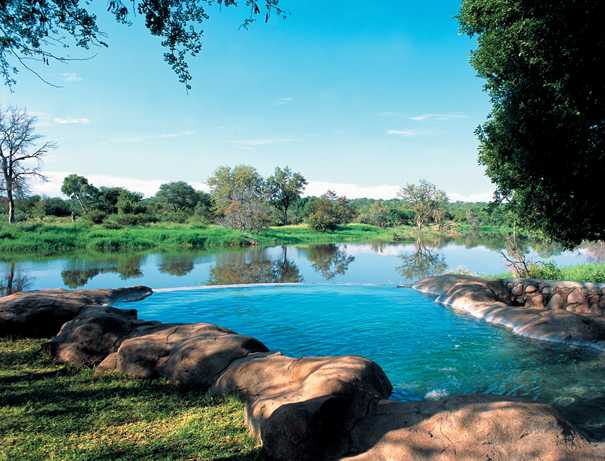 |
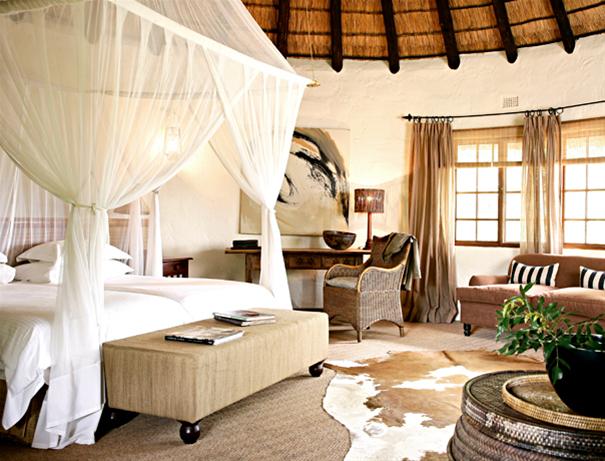
Arrive at Motswari as a guest and leave as a friend. This sentiment is the hallmark of Motswari, a traditional safari camp which reflects elements of African nostalgia, romance and charm. Set deep in the Timbavati, adjoining the Greater Kruger Park, you are assured of rich game viewing and sightings of the Big 5 in their natural environment, as the boundary with Kruger is open.