We cheated. This interview has been posted as part of our 10 Questions for South Africans series but today''s interviewee is not from SA and we asked her 12 Questions.
But bead artist Anna Richerby has made South Africa her home (for now) and does more than many locals in the community - so she gets to be featured as an honourary SAffer for the sake of this post. So sue us!
10 Questions for Anna Richerby
1. Where in the UK are you from and what made you choose to come to SA?
I''m from Leicester, a small city in the Midlands. It is one of the most multi-cultural cities in Europe, and was a fascinating place to grow up. I studied for my degree in Glasgow.
A few things motivated my decision to first come to South Africa on a Gap Year when I was eighteen. I used to spend a lot of time on a small island called Iona in Scotland when I was young. The Iona Community had strong links to South Africa, and I could sing freedom songs in Xhosa when I was twelve years old, long before I even left Europe. That piqued my interest at first. I also wanted to spend my gap year working in the disability sector, and Cape Town was an ideal place to do that. So I landed up here, fell in love first with the land, then with a particular South African, and the rest is history.
2. What place (in SA) do you call home, and why?
Lansdowne...or Rondebosch East... or Crawford! No one is quite sure what the name is of the area I live in (thanks to Group Areas Act interference), but it''s definitely home! This is the place I first lived in, and though I''ve lived all over the peninsula, I ended up back here. My corner of Rondebosch East is, in my opinion, the best bits of suburban life without the high walls.
3. Favourite place to have breakfast near(ish) where you live?
 Um... I tend to leave home before breakfast time! So I often have breakfast at the lovely Kwalapa, the brand new delicatesan at Montebello where I work. They do a killer croissant and gorgeous hot chocolate.
4. How long have you been living here and what, exactly, do you do?
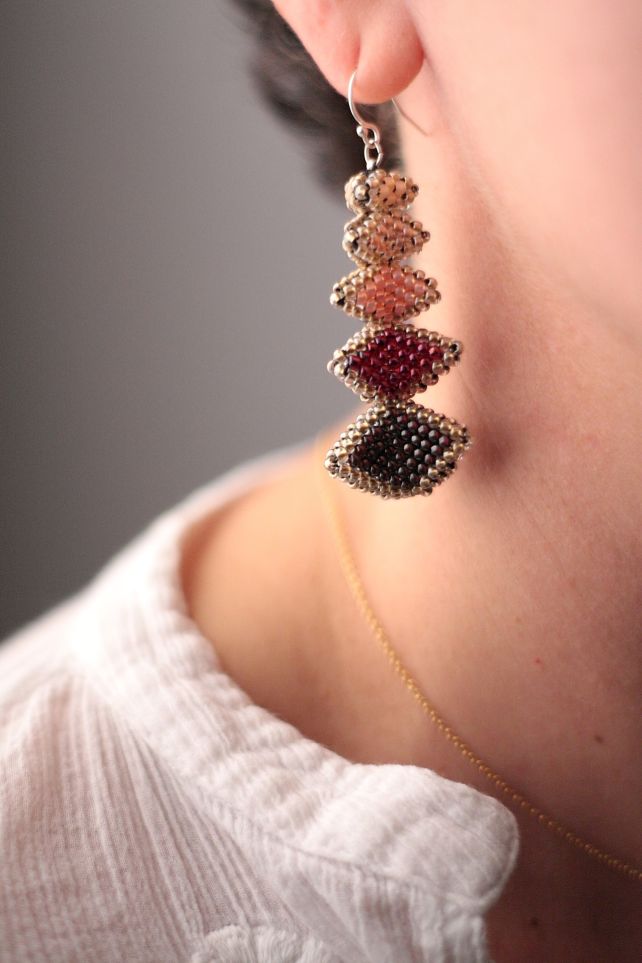
I''ve lived here for five years in total, but I''ve lived here permanently since I graduated in 2005. I''ve worn many hats in my time, but recently I have taken over a small beadwork business that I previously freelanced for. It is called Beloved Beadwork, and we make high-end, beautifully crafted, beadwoven jewellery. It is such a joy to run my own business and get to explore my creative side further. Through my freelance work, I''ve got to know most of my employees over the last three years. We make a great team now.
5. How did you get interested in beadwork? How did it come to be that an English girl is teaching African women beadwork – is that not the ‘wrong’ way round?
 Good question! I''ve been fascinated with beads since I can remember. But there aren''t many bead shops in the UK, so I only really became serious about beadwork when I moved to Canada for the third year of my degree. Canada has, in many ways, a remarkably similar colonial history to South Africa, and that leads to an eerily similar beadwork tradition. In between marathon essay writing or exam revision sessions I would go to the bead shop for a break. It''s there I picked up my first beadweaving book. My degree (Anthropology and Economics) helped to fuel my interest – the economic history of beads is incredible, it is arguably one of the first globalised products – and in anthropological terms, people seemed to have derived meaning and identity via bead adornment for thousands of centuries. I just love beads!
I didn''t, however, move to South Africa to work with beadworkers. I came here to work for the HIV prevention and sector. However, I discovered that as soon as people found out I could bead, they''d ask me to do a session for their support group, or assist with a product problem. I realised quickly that there was a niche – people really wanted to develop their beadwork products and grow their skills or those of their producers, but struggled to access training and resources. I volunteered for a while, then starting taking up freelance work. Four years after I moved here that process culminated in my taking over my own business.
I think it''s a bit of a myth that all African women bead! Most of my employees didn''t bead before they came into contact with the industry, and though they love what they do, they definitely see it as a job as much as a tradition. There have been some major shifts in South African society in the last century, and combinations of missionisation, migration, ''development'' and economic sanctions have had massive impacts on beadwork skills. Also, half of my employees are from elsewhere in Africa, mostly the DRC, Rwanda and Burundi. They never beaded in their countries of origin. They are highly educated professional women, but they struggle to get their qualifications recognised in South Africa. Making beadwork is a convenient way to earn money in order to return to university and re-qualify.
We are an extremely diverse staff group, and I think we''re a stronger company as a result of that.
6. Who wears the jewellery you create – i.e. which kind of people make up your market?
This is a tricky one. As soon as I think I have an understanding of our customer base, a new group comes in and shocks me! The thing about beads is that they are uniquely mesmerising and fascinating, and so beadwork tends to appeal to a vast range of people. We have a broad collection of colour schemes and designs. Some of our work is very structural, and other pieces are very delicate. We charge what we think our work is really worth, so our lowest price is R150 for a simple pair of earrings, and our highest is around R1300 for a complex necklace.
We definitely appeal to people who are excited to see big innovation in the beadwork design field, and to those who have an interest in dignified and well-paid employment for craft producers.
7. What inspires you (in your work, every day, in life)?
 Believe it or not, I dream of beads quite often! Beadwork is an intensly mathematical exercise, so often I am inspired by the need to develop new patterns, textures and shapes. Most of our ranges are named after geographical landmarks or types, such as ''Ocean Floor'', ''Twelve Apostles'' ''Thousand Hills'' or ''Adderly Street''.
Sometimes my inspiration is a little simpler. During Barack Obama''s presidential campaign we developed ''Aids Pin'' style brooches with minute beads which featured his face! The group who make them up say that although it''s very difficult and time consuming, they derive such pleasure from making items that feature Obama, it''s an utter joy to make the pins!
In the long term, I''d like some of our more artistic, one of a kind projects to start expressing ideas and concepts more directly. We are a very social-justice-minded group, with intensely important conversations occurring around our beading table. It would be great if some of that could be reflected in our work.
8. To date, what has been your most rewarding (work) project and why?
One day I was watching TV, and I thought I saw someone wearing huge beaded Africa earrings. On second glance I was mistaken, but an idea was born! That evening I made my first Africa pendant. It was around ten hours of pain-staking work. A few months later, I realised I could make every country in a different colour of bead. That took fifteen hours to make the first one! Then I reduced the pattern, and made tiny Africa earrings, purely from beads and cotton. They are now part of our catalogue, and we''ve probably made in excess of one thousand tiny Africas. They feel like such an achievement – so minute yet so symbolic. I think it was around the time that I made them that I started to think I could make a career out of this!
9. When you’re away from SA what do you miss?
Well, there''s a great Zimbabwean Ex-pat shop down the road from my parent''s house in Leicester, so I never want for chutney or pinapple cooldrink! I miss everything about this place when I am away. In the past when I have considered moving back to the UK, I''ve gone for a visit and yearned for South Africa. To be honest, I can''t explain very well why, but I feel at home here and it''s where I want to be.
10. Tell us, briefly, about a positive or unique South African holiday / travelling experience.
I took a brief trip to Durban and Ixopo with my mum when she visited a couple of years ago. I fell in love with Durban! I can''t put my finger on it exactly, but it feels like a really lived-in city. And the bead shops! Oh the bead shops. The road to Ixopo was incredible, I had Alan Paton quotations ringing in my ears for the whole trip.
(Two BONUS Questions - because we can - Ed)
11. Who is your South African hero, and why?
 I don''t think there''s one person in particular I can pinpoint, but a recent pre-election hustings in Salt River run by various gender and labour activists reminded me how in love I am with the on-the-ground community activists we have in South Africa. Sometimes I meet activists who just blow me away with their strength, intelligence and determination, people who work tirelessly to better the lives of their peers. We need more of them, and we should be immensely grateful for the ones we have.
12. What project(s) do you have in the pipeline?
Hmmm, well since we''re only a young company, we''re still working pretty hard to get our name and products known, and get a shore footing for ourselves. We''ll have a second launch party (who says you can only have one?!) at the start of summer, and you should see our name around quite a lot in the next few months. We''re looking forward to having a great little online shop.
Long term, I''d really love for us to start making more unique, one of a kind pieces which explicitly explore or illustrate our ideas and thoughts. Long, long term, I just hope we become renowned for our innovative designs, and people feel good wearing our jewellery!
About Beloved Beadwork
- Browse and buy Anna and her team''s beautiful creations at Beloved Beadwork, newly located at the beautiful Montebello Design Centre in Newlands.
- Visit the Beloved Beadwork website.
- All images by Radesh Moodley. All rights reserved.
- See more beautiful Beloved Beadwork designs as flickr.com/photos/belovedbeadwork where you can also learn more about the people behind the business.
